Aug 29, 2022

Yeesh

There's something wrong with this Trump guy - duh.


But there has to be something even more wrong with a GOP that keeps putting up with his shit.

But then again, he keeps recycling his shit over and over, so may this is just a re-re-re-release of his basic classic shit(?)


Trump demands reinstatement as 'rightful' president or 'a new Election, immediately!' as some Republicans seek distance from him

Former President Donald Trump demanded reinstatement as president or "a new Election, immediately" after news that Facebook temporarily limited a controversial story about Hunter Biden's laptop in users' news feeds before the 2020 election.

Trump was responding to Facebook, now Meta, CEO Mark Zuckerberg's comments on Joe Rogan's podcast that a New York Post story about the laptop "fit the pattern" of polarizing content, including "Russian propaganda," that the FBI had warned the company about. The laptop story had several red flags that raised questions about its authenticity and Facebook limited its reach on the site's news feeds for a few days.

Trump's statement on Truth Social doubles down on false election fraud claims as some Republicans, the Washington Post has reported, are trying to distance themselves from his personal grievances ahead of the midterm elections in November.

In his statement, Trump wrote in all capital letters that the "FBI BURIED THE HUNTER BIDEN LAPTOP STORY BEFORE THE ELECTION knowing that, if they didn't, 'Trump would have easily won the 2020 Presidential Election.' This is massive FRAUD & ELECTION INTERFERENCE at a level never seen before in our Country."

Trump continued: "REMEDY: Declare the rightful winner or, and this would be the minimal solution, declare the 2020 Election irreparably compromised and have a new Election, immediately!"

Facebook allowed users to share the story but it showed up less in people's news feeds, so it was seen less. During Rogan's program, Zuckerberg said he couldn't recall if the FBI warned him about the New York Post story specifically, but he thought the story "fit the pattern."

But Meta later tweeted that "nothing about the Hunter Biden laptop story is new" and that the "FBI shared general warnings about foreign interference — nothing specific about Hunter Biden."

Trump has been railing against the FBI since agents searched his Mar-a-Lago home earlier this month for classified documents.

Trump won't be reinstated after losing the election, although QAnon conspiracy theorists spread the idea a year ago. The New York Times' Maggie Haberman said last year that Trump was telling allies that he thought he'd be reinstated, as well.

Federal investigators are weighing possible charges related to Hunter Biden's business activities.

The president has not been implicated, CNN reported, but Republicans say they will ramp up their investigations of the Bidens if they win control of the House in the midterm elections.

Today's Dirty Fuels Fuckup

For all their overblown rhetoric about 'decentralization' and 'energy independence', conservatives are ridiculously upside down and backwards on what should happen if they truly believed what they claim those terms should mean.

I've got news for y'all. They've been lying their asses off about that too.

So what happens when one refinery goes down?

How is anyone "energy independent" when we're at the mercy of 5 or 6 ginormous oil companies?


BP Whiting, Indiana, refinery shut; timing of restart unknown -sources

BP Plc’s (BP.L) 435,000 barrel-per-day Whiting, Indiana, refinery is shut and undergoing damage assessment following loss of electrical power and cooling water systems in a Wednesday fire, sources familiar with plant operations said on Friday.

The timing for the refinery’s restart remains unknown as all of the refinery’s units will have to be checked for damage following the sudden loss of electrical power on Wednesday afternoon, the sources said.

BP spokesperson Christina Audisho said on Friday the refinery is "continuing to assess when a restart of the affected units can take place."

Following the assessment, any damage found will have to be repaired.

A few of the refinery’s units have been on cold circulation since, but will require being heated to operating temperatures that can reach 1,000 Fahrenheit (538 Celsius), the sources said.

The Whiting refinery outage sent Chicago CBOB gasoline up 30.5 cents a gallon on Thursday and ultra-low sulfur diesel up 17 cents.

The shutdown of one of the largest refineries in the Midwest comes as farmers are beginning fall harvest across the northern central states.

Whiting is the sixth-biggest by capacity in the United States and the company's largest in the nation, according the U.S. Energy Information Administration.

Today's Beau

We know there has to be some number of Dems doing shitty things like this fund-raising scam in Tennessee, but we don't hear very much about them very often.

And I really do think that's not because of a liberal bias in the political media. Cuz fake lord knows the Press Poodles are always willing to jump on a good old-fashioned Both Sides story so they can countervail their reputation for being a buncha leftie stooges.

So anyway, for now, Republicans are the ones who keep showing up as dog-ass crooks, uninterested in anything but lining their pockets with money that they haven't come by honestly.

Justin King - Beau Of The Fifth Column


Reality has a well known liberal bias.
Liberals have a well known reality bias.

Former Tennessee speaker, top aide arrested in corruption probe

Aug 23, 2022

NASHVILLE, Tenn. (AP) — Tennessee’s former House Speaker Glen Casada and his top aide were arrested Tuesday on federal charges including bribery, kickbacks and conspiracy to commit money laundering involving federal funds.

Their indictments come months after a Republican legislator, Rep. Robin Smith, abruptly resigned while facing federal wire charges that involved Casada. Casada was not directly named in those court documents, but her March indictment kicked off speculation that more charges would come from the corruption investigation.


According to the U.S. Department of Justice, Casada and former Chief of Staff Cade Cothren face a 20-count indictment. FBI agents arrested both at their homes Tuesday morning.

The charging document alleges Casada and Cothren exploited their positions of power by working with another unnamed lawmaker to funnel money to themselves using a political consulting firm that concealed their involvement.

more at NYT (pay wall)

Ex-Tennessee Speaker and Aide Charged With Bribery and Conspiracy

F.B.I. agents arrested Glen Casada and Cade Cothren at their Tennessee homes on Tuesday.


A former Tennessee speaker of the House and his former chief of staff were arrested on Tuesday at their homes on federal charges in connection to a bribery and kickback scheme, prosecutors said.

Former Speaker Glen Casada, 63, a Republican, and his top aide, Cade Cothren, 35, were charged with conspiracy to commit theft from programs receiving federal funds; bribery and kickbacks concerning programs receiving federal funds; honest services wire fraud; and conspiracy to commit money laundering.

The charges were announced by U.S. Attorney Mark H. Wildasin for the Middle District of Tennessee and Assistant Attorney General Kenneth A. Polite Jr. of the Justice Department’s criminal division in a joint statement on Tuesday.

Mr. Casada and Mr. Cothren appeared in federal court on Tuesday. Mr. Casada entered a plea of not guilty “and will present a vigorous defense at trial,” Ed Yarbrough, a lawyer for Mr. Casada, said on Tuesday. He did not comment further. It was not immediately clear who was representing Mr. Cothren. If convicted, Mr. Casada and Mr. Cothren each face up to 20 years in prison.

The arrests came months after the resignation of Representative Robin Smith, a Tennessee Republican who pleaded guilty to a federal wire fraud charge over involvement in the political consulting scheme with Mr. Casada and Mr. Cothren, according to The Associated Press.

Around October 2019, Mr. Casada, who represented Tennessee House District 63 in Williamson County, and another conspirator, who was also a Tennessee representative but was not named in the prosecutors’ statement or court documents, launched a scheme “to enrich themselves” by using their positions to obtain state approval for a company called Phoenix Solutions as a vendor to provide mail services to members of the state’s General Assembly and political campaigns, according to the statement.

Mr. Casada, Mr. Cothren and the third associate then sought to pull state funds for Phoenix Solutions, a political consulting business that was run by Mr. Cothren, according to court documents, one that Mr. Casada and the third individual profited from.

“Casada and the other conspirator are alleged to have enriched themselves by obtaining bribes and kickbacks from Cothren, in exchange for securing the approval of Phoenix Solutions as a mailer program vendor,” according to the statement.

The associates told members of the state’s General Assembly that the company was run by a man named “Matthew Phoenix” who was described as “an experienced political consultant,” but was actually a fabrication, prosecutors said.

Mr. Casada, Mr. Cothren and the third conspirator concealed their involvement in Phoenix Solutions “by submitting sham invoices to the state of Tennessee in the names of political consulting companies” owned by Mr. Casada and the other conspirator to funnel funds to the company from the state, prosecutors said.

In all, Phoenix Solutions received nearly $52,000 through the mailer program, according to court documents.

Mr. Casada was first elected to the Tennessee House of Representatives in 2003 and was re-elected as a representative in each subsequent General Assembly, according to court records.

In 2019, Mr. Casada resigned as speaker from the Tennessee House after it was revealed that he and Mr. Cothren had “exchanged sexually explicit text messages” about women, according to The Associated Press.

Public Affairs

... conducted for private advantage.


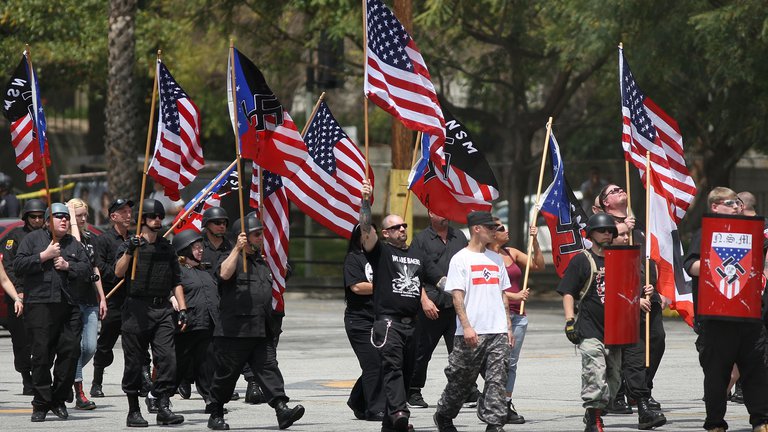
4 U.S. Code § 8 - Respect for flag
(g)The flag should never have placed upon it, nor on any part of it, nor attached to it any mark, insignia, letter, word, figure, design, picture, or drawing of any nature.

Republicans have no honor.

Aug 28, 2022

Today's Quote


Politics is a strife of interests masquerading as a contest of principles; the conduct of public affairs for private advantage.
--Ambrose Bierce, The Devil's Dictionary

Today's PG


Leigh McGowan

If they can do it to Trump, they can do it to you!

Uh - yeah, genius. They can do it to anyone who breaks the law. That's how it's supposed to work - it's what we pay them to do.

About That America First Thing

It's pretty annoying that we have to keep explaining the point that certain phrases and the ideas they signify are shitty things that we've had to deal with more than a few times before.


The phrase “America First”
became a national slogan in 1915....
...Then it became a wartime jingoistic slogan on par,
as was noted at the time, with “Deutschland über Alles”...

...At the same time, a new political group was organizing and asserting a national presence – the Ku Klux Klan. By the mid-1920s, the Klan had as many as five million members.
In other words, one out of every three or four white Protestant American man was a Klansman.

10-Minute Talks: America first and American fascism
by Professor Sarah Churchwell
06-20-2020

Hello, my name is Sarah Churchwell. I'm the Director of the Being Human Festival, the UK's national festival of the humanities, and Chair of Public Understanding of the Humanities at the University of London’s School of Advanced Study, where I research and write about American cultural history. For this special Summer Showcase 10-Minute Talk, I'm going to give a brief history of the slogan “America First” and its relation to lesser-known histories of American fascism.

When Donald Trump chose “America First” as one of his favourite political slogans – a phrase he went on to emphasise not only on the campaign trail but in his inaugural address and countless times during his presidency, many observers pointed to the troubling history behind the slogan.

What may seem at first glance merely a patriotic or nationalistic slogan – one that implies economic protectionism – in fact has a much longer and darker history in American political discourse than many people realise.

When Trump resurrected “America First” worried observers pointed to the most notorious iteration of the phrase – the America First Committee of 1942/1941, eventually led by Charles Lindbergh, whose anti-Semitic prejudices were well known at the time, and clearly demonstrated historically in the publication of his diaries and correspondence, where he privately mused about the so-called “Jewish problem” and the “Jewish question”, but also in public speeches he made, drawing on anti-Semitic tropes from the notorious forgery “The Protocols of the Elders of Zion”, which claimed that a Jewish conspiracy of bankers and media moguls was controlling the world. The same tropes that Hitler and Goebbels used in their own anti-Semitic propaganda.

The America First Committee, or AFC, sought to keep the United States out of World War II, on the basis that the fight against fascism was not America's fight. Some supported this position for motives of isolationism, others as pacifists or conscientious objectors, but a great many – like Lindbergh himself – also believed that what they called “Jewish interests” were trying to manipulate America into joining the war against its national interests. Implying, again as did the Nazis, that only Jewish people criticize Nazis and that Jewish interests were not only distinct from, but opposed to, America's national interest. The obvious implication being that Jewish-Americans are not really Americans at all. Lindbergh repeatedly said in his “America First” speeches that America should only join a European war if it was to protect what he called “the white races” from foreign invasion by “some Asiatic intruder”. That was reason to go to war in Europe, but fighting fascism for Lindbergh was not. As long as white people were in charge, he said, in so many words, it didn't matter if they were German fascists or British democrats. The AFC was denounced by many at the time as a force for appeasement; Lindbergh a Vichy figure – an American collaborator.

Part of the objection expressed by American anti-fascist voices at the time, however, was also to the long history of the phrase “America First” itself. This was not in fact a slogan that emerged with the Second World War, but rather with the First. American adults in 1940 had grown up with this phrase and they knew it was what we call a ‘dog whistle’ – a coded reference intended to be understood by a target audience, that might seem innocent to the unaware.

The phrase “America First” became a national slogan in 1915. President Woodrow Wilson used it to tell the country that what were known as “hyphenate Americans” at the time, which is to say immigrant communities – German-Americans, Irish-Americans, Italian-Americans – needed to identify their loyalty. Was it “America First”, he demanded, or was it not? In other words, the President of the United States used the phrase “America First” as a loyalty test for recently naturalised American citizens. The slogan immediately exploded into a national catchphrase. Both Wilson his Republican opponent used it in the 1916 election, then it became a wartime jingoistic slogan on par, as was noted at the time, with “Deutschland über Alles”.

After the war, “America First” was used by isolationists, including William Randolph Hearst, to keep America out of the Treaty of Versailles and League of Nations. Then Warren G Harding successfully campaigned in 1920 on an isolationist, protectionist, “America First” platform, before the phrase was used to pass anti-immigration, eugenicist, restrictionist legislation in the mid-1920s. At the same time, a new political group was organising and asserting a national presence – the Ku Klux Klan. By the mid-1920s, the Klan had as many as five million members. In other words, one out of every three or four white Protestant American man was a Klansman.

The first Klan had been established in 1866 by a bunch of disaffected white supremacists in the immediate aftermath of the Civil War, after the emancipation of slaves and the extension of the franchise to African-American men. The Klan was only the most famous of many white supremacist groups that committed atrocities after the Civil War across the American South including torture, mutilation, dismemberment and burning human beings alive. They murdered black politicians in public, in broad daylight to stop them asserting their new legal and political rights. Their behaviour was so vicious and so lawless that the federal government took action and brought the organisation down, so the Klan was defunct by the mid-1870s, but although the organisation was gone, its savage and malevolent beliefs and behaviours survived.

It was at this time that the white south began erecting Confederate monuments to leaders of the Klan and the Confederate Army that marched against the United States government to secure its right to hold other human beings in bondage. It was also at this time that the white south began to whitewash, in every sense, its motives and actions during the conflict, rewriting history to say that slavery and white supremacism had not motivated the war but rather the incursion of federal government into state’s rights. The specific states right that they had fought over was in fact their right to keep slaves, but they began to skip that part and then to deny it outright.

In 1915, the same year that President Wilson who was born in the slaveholding south, before the Civil War and an avowed segregationist made “America First” a catchphrase, a Jewish man named Leo Frank was lynched in Atlanta a few months after a film called The Birth of a Nation was released. The film glorified the first Klan as a noble uprising of white people protecting their way of life from vicious marauding black people, when in historical fact it was exactly the other way around. The two events together sparked the rebirth of the Klan.
The second Klan declared itself a 100% American organisation that believed in Christian nationalism and ‘upheld white supremacism’. That is their language. One of its favourite slogans was ‘America First’ which is printed on pamphlets and ads announcing its explicit commitment to white supremacism.

At exactly the same time, in the early 1920s a new political phenomenon arose in Italy called fascism, as Mussolini took power. Americans instantly recognised what they were watching, as just a few quotations from American newspapers in 1921 and 1922 – as Mussolini took power – attest. The “Fascisti'”, they said, “might be known as the Ku Klux Klan” or “the Klan is the Fascisti of America” or “the single success of the Fascisti, or Italian Ku Klux Klan” or “the Fascisti is a secret order having some of the Ku Klux Klan method” and so on.

By the end of the 1920s, the second Klan was in decline – brought down by corruption and sex scandals – plus ça change! But in its stead soon sprouted a host of nativist, Christian nationalist, conspiratorial, anti-Semitic, white supremacist and xenophobic groups that borrowed many of the impulses and symbolisms of European fascism, including coloured shirts. In America in the 1930s there were the Blackshirts, the Khaki Shirts, Silver Shirts, White Shirts, the Brownshirts of Father Coughlin, the Greyshirts and the Dress Shirts – among many other extreme right-wing groups. The German American Bund began its existence as the “Friends of Hitler” movement before holding rallies and parades that matched the American stars and stripes with swastikas. All of these groups professed themselves “100% American”, and said they “put America first”. By the late 1930s they were referred to collectively and pejoratively in interchangeable terms as “Bundists”, “100 Percenters” and “America Firsters”. When the America First Committee formed in 1940 and began to urge America to stay out of the war, it was drawing on this long rhetorical history that everyone knew, and all of these groups flocked to it, seeing in it the political legitimacy they had long sought. Not everyone in the AFC agreed with the positions of what was called the lunatic fringe at the time, but they singularly failed to separate themselves from it – to denounce these supporters.

Ten minutes is not enough time to explain this complex, dark, controversial and inflammatory history. I have left an enormous amount out of this story, including how much European fascist movements learned from the structures and arguments of American white supremacism and anti-Semitism. But even the bare bones I presented in these brief minutes should help us hear the ferocious irony in the title of Sinclair Lewis’ best-selling 1935 novel, It Can’t Happen Here.

Aug 27, 2022

Today's Pix

click
👇🏻


Today's Church & State


Contrary to popular memes, Amy Coney Barrett is not a Handmaid. She's a full-blown god-knobbin' zombie zealot.


Revealed: leaked video shows Amy Coney Barrett’s secretive faith group drove women to tears

Wife of founder of People of Praise says members ‘were always crying’ during discussions about women’s subservience to men


The People of Praise, a secretive Christian faith group that counts the conservative supreme court justice Amy Coney Barrett as a member, considered women’s obedience and subservience to men as one of its central early teachings, according to leaked remarks and writings of the wife of one of the group’s founders.

A leaked video of a recent private People of Praise event, marking its 50th anniversary, shows Dorothy Ranaghan explaining how some female followers of the faith group cried intensely in reaction to the group’s early teachings on “headship” and the “roles of men and women”, in which men are considered divinely ordained as the “head” of the family and dominant to women.

Asked in an interview during the anniversary event about the years after the group’s members first made a “covenant” to join People of Praise in the early 1970s, Dorothy Ranaghan said: “Some of the women – who are still in my women’s group, as a matter of fact – were wearing sunglasses all the time, because they were always crying and would have to hold on to their chairs every time somebody started teaching, because ‘What are we going to hear this time?’”

She then added, as the audience and her interviewer laughed: “But it all worked out just fine in the end.”

The comment marks the first time a statement about some women’s negative early responses to “headship” teachings has been published. The leaked footage was shared with the Guardian by a source who asked to remain anonymous.

Former members of People of Praise, many of whom are critical of the group’s dominance over members’ lives, have described the group as calling for complete obedience of women to their husbands.

The Guardian has previously reported that one of the group’s former members described in a sworn affidavit filed in the 1990s that Kevin Ranaghan – a group co-founder and Dorothy’s husband – exerted almost total control over the former member when she was living in the couple’s household, including making all decisions about her finances and dating relationships. The group also embraces traditions like encouraging members to speak in tongues, and performing exorcisms.

"Women in my group were always crying"

Barrett, who lived in the Ranaghan household while she attended law school at Notre Dame, has never publicly disclosed or discussed her membership in the Christian charismatic sect, where her father had a leadership role and where she previously served as a “handmaid”. Barrett has said she is a “faithful Catholic” whose religious beliefs would not “bear in the discharge of my duties as a judge”.

But while Barrett’s personal faith-based opposition to abortion rights and Roe v Wade were known before her 2020 confirmation and before she joined a majority of justices in overturning the landmark ruling that protected abortion rights nationally, less is known about the culture in which Barrett was raised and its views on women and childbirth, suffering, and their role in society.

Barrett has never addressed how the reversal of Roe might affect a woman’s life. But during oral argument in Dobbs v Jackson, the supreme court case that ultimately overturned Roe, Barrett referred specifically in questions to the availability of so-called “safe haven” laws across the US, which allow mothers to abandon newborns in designated locations without the risk of punishment.

Barrett suggested that the availability of such legal protections for new mothers meant that while women might be forced to give birth if Roe were overturned, they would not necessarily be forced to become parents, or be burdened by parenthood.

The line of reasoning was decried as “cruel and dangerous” by pro-choice activists and writers, who said that seeing safe haven laws as a viable replacement for reproductive choice ignored real health risks associated with pregnancy and childbirth, and ignored women’s rights to bodily autonomy.

Barrett’s question also appears to echo the People of Praise culture in which she was raised and has chosen to remain a part of, which emphasizes the importance of childbirth, pregnancy and the abandonment of autonomy and privacy it supposedly entails, as a core part of what it means to be a woman.

In her early writings, Dorothy Ranaghan emphasized the need for women to be “self-giving, responsible and reserved”. In a 1978 article that appeared in New Covenant magazine, called “Fully a Woman”, childbearing is described as a “central reality of womanhood” that “determines our presence in the world”, even for those who “by chance or choice” did not have children.

“The child in the womb expands the mother’s body, changing its dimensions. As her body yields, so do the borders of privacy and selfishness. Her very existence gives to another.” Women who are most admired, she wrote, “are not private persons, but are surrendered and available to care for others”.

“Pregnancy teaches a woman that others have a claim on her very person for the service of life. Rather than annihilating her, pregnancy makes her a new person, radiant and strong: a mother,” she wrote.

Once women gave birth in the People of Praise, work to care for them is divided on gender lines, according to Adrian Reimers, a Catholic theological critic and early member of the People of Praise who was dismissed in 1985 and wrote about his experience.

Reimers’ book critiquing the group, called Not Reliable Guides, states that men in People of Praise “were quietly taught by their heads and leaders not to change or rinse out diapers” and that women’s emotions were “distrusted”. Pastoral problems were often addressed by asking a woman where she was in her menstrual cycle.

Women, Reimers wrote, played a “decidedly secondary role to men” and a married woman was “expected always to reflect the fact that she is under her husband’s authority” and under his pastoral care. A guide on the group’s approach to outreach in the Caribbean, Reimers said, explicitly stated: “We should probably deal with the Caribbean matriarchal system by quietly developing an alternate rather than encouraging a confrontation.”

Reimers has written that he believed that the People of Praise’s views on women were rooted not in the Catholic tradition, but rather in Kevin Ranaghan’s involvement in the 1970s National Men’s Shepherds Conference, which was co-sponsored by Protestant leaders and believed that men were ordained by God to lead.

“It is no surprise that all these communities see feminism as one of the principle [sic] ideological evils of our time,” Reimers wrote.

In a statement released after publication of this article, Dorothy Ranaghan said: “My remarks were meant as a joke as most of the people in the room understood. I would never be part of a group that oppresses women and I never have been part of one. But I have been proud to be one of the women leaders in the People of Praise for more than 50 years.”

She added: “I’ve been in the company of many strong women – lawyers, doctors, educators, businesswomen, wives and mothers, and we are in no way oppressed or dominated. We are responsible for our own decisions; we are free and happy. Furthermore, it is unconscionable to me that any of the more than 40 men and women who have lived with our family over the years would consider my husband an oppressor. As those who know him would agree, he is a kind, gentle man who listens carefully and respects the opinions of women and men and he always has.”

Barrett did not respond to a request for comment.

He's A Bad Man


(pay wall)

Donald Trump Is Not Above the Law

Over the course of this summer, the nation has been transfixed by the House select committee’s hearings on the events of Jan. 6, 2021, and how or whether Donald Trump might face accountability for what happened that day. The Justice Department remained largely silent about its investigations of the former president until this month, when the F.B.I. searched his home in Palm Beach, Fla., in a case related to his handling of classified documents. The spectacle of a former president facing criminal investigation raises profound questions about American democracy, and these questions demand answers.

Mr. Trump’s unprecedented assault on the integrity of American democracy requires a criminal investigation.
The disturbing details of his post-election misfeasance, meticulously assembled by the Jan. 6 committee, leave little doubt that Mr. Trump sought to subvert the Constitution and overturn the will of the American people. The president, defeated at the polls in 2020, tried to enlist federal law enforcement authorities, state officials and administrators of the nation’s electoral system in a furious effort to remain in power. When all else failed, he roused an armed mob that stormed the Capitol and threatened lawmakers.

The Justice Department is reportedly examining Mr. Trump’s conduct, including his role in trying to overturn the election and in taking home classified documents. If Attorney General Merrick Garland and his staff conclude that there is sufficient evidence to establish Mr. Trump’s guilt on a serious charge in a court of law, then they must seek an indictment too.

This board is aware that in deciding how Mr. Trump should be held accountable under the law it is necessary to consider not just whether criminal prosecution would be warranted but whether it would be wise. No American president has ever been criminally prosecuted after leaving office. When President Gerald Ford pardoned Richard Nixon, he ensured that Nixon would not be prosecuted for crimes committed during the Watergate scandal; Ford explained this decision with the warning that such a prosecution posed grave risks of rousing “ugly passions” and worsening political polarization.

That warning is just as salient today. Pursuing prosecution of Mr. Trump could further entrench support for him and play into the conspiracy theories he has sought to stoke. It could inflame the bitter partisan divide, even to the point of civil unrest. A trial, if it is viewed as illegitimate, could also further undermine confidence in the rule of law, whatever the eventual outcome.

The risks of political escalation are obvious. The Democratic and Republican parties are already in the thick of a cycle of retribution that could last generations. There is a substantial risk that, if the Justice Department does prosecute Mr. Trump, future presidents — whether Mr. Trump himself or someone of his ilk — could misuse the precedent to punish political rivals. If their party takes a majority in the House of Representatives after the midterm elections, some Republicans have already threatened to impeach President Biden.

There is an even more immediate threat of further violence, and it is a possibility that Americans should, sadly, be prepared for. In the hours after federal agents began a court-approved search of Mr. Trump’s residence in Palm Beach, based on a warrant investigating possible violations of three federal laws, including one that governs the handling of defense information under the Espionage Act, his most fervent supporters escalated their rhetoric to the language of warfare. As The Times noted, “The aggressive, widespread response was arguably the clearest outburst of violent public rhetoric since the days leading up to the Jan. 6 attack on the Capitol.”

Mr. Garland has been deliberate, methodical and scrupulous in his leadership of the Justice Department’s investigations of the Jan. 6 attack and the transfer of documents to Mr. Trump’s home. On Friday a redacted version of the affidavit used to obtain the warrant was released, revealing that the Justice Department asked to search the premises to recover documents because of concerns that their disclosure could compromise “clandestine human sources” of intelligence and because it had
probable cause to believe it would find “evidence of obstruction” at the premises.

No matter how careful Mr. Garland is or how measured the prosecution might be, there is a real and significant risk from those who believe that any criticism of Mr. Trump justifies an extreme response.

Yet it is a far greater risk to do nothing when action is called for. Aside from letting Mr. Trump escape punishment, doing nothing to hold him accountable for his actions in the months leading up to Jan. 6 could set an irresistible precedent for future presidents. Why not attempt to stay in power by any means necessary or use the power of the office to enrich oneself or punish one’s enemies, knowing that the law does not apply to presidents in or out of office?

More important, democratic government is an ideal that must constantly be made real. America is not sustained by a set of principles; it is sustained by resolute action to defend those principles.

Immediately after the Jan. 6 insurrection, cabinet members reportedly debated privately whether to remove Mr. Trump from power under the authority of the 25th Amendment. A week after the attack, the House impeached Mr. Trump for the second time. This editorial board supported his impeachment and removal from office; we also suggested that the former president and lawmakers who participated in the Jan. 6 plot could be permanently barred from holding office under a provision of the 14th Amendment that applies to any official who has “engaged in insurrection or rebellion” or given “aid or comfort” to those who have done so. But most Republicans in the Senate refused to convict Mr. Trump, and Congress has yet to invoke that section of the 14th Amendment against him. As a result, the threat that Mr. Trump and his most ardent supporters pose to American democracy has metastasized.

Even now, the former president continues to spread lies about the 2020 election and denounce his vice president, Mike Pence, for not breaking the law on his behalf. Meanwhile, dozens of people who believe Mr. Trump’s lies are running for state and national elected office. Many have already won, some of them elevated to positions that give them control over how elections are conducted. In June the Republican Party in Texas approved measures in its platform declaring that Mr. Biden’s election was illegitimate. And Mr. Trump appears prepared to start a bid for a second term as president.

Mr. Trump’s actions as a public official, like no others since the Civil War, attacked the heart of our system of government. He used the power of his office to subvert the rule of law. If we hesitate to call those actions and their perpetrator criminal, then we are saying he is above the law and giving license to future presidents to do whatever they want.

In addition to a federal investigation by the Justice Department, Mr. Trump is facing a swirl of civil and criminal liability in several other cases: a lawsuit by the attorney general for the District of Columbia over payments during his inauguration ceremonies; a criminal investigation in Westchester County, N.Y., over taxes on one of his golf courses; a criminal case in Fulton County, Ga., over interference in the 2020 election; a criminal case by the Manhattan district attorney over the valuation of Mr. Trump’s properties; and a civil inquiry by New York’s attorney general into Mr. Trump and the Trump Organization.

The specific crimes the Justice Department could consider would likely involve Mr. Trump’s fraudulent efforts to get election officials in Georgia, Arizona and elsewhere to declare him the winner even though he lost their states; to get Mr. Pence, at the Jan. 6 congressional certification of the election, to throw out slates of electors from states he lost and replace them with electors loyal to Mr. Trump; and to enlist officials from the Departments of Justice, Homeland Security and Defense to persuade officials in certain states to swing the election to him and ultimately stir up a mob that attacked the Capitol. The government could also charge Mr. Trump with seditious conspiracy, a serious charge that federal prosecutors have already brought against leaders of far-right militia groups who participated in the Capitol invasion.

The committee hearings make it clear: Mr. Trump must have known he was at the center of a frantic, sprawling and knowingly fraudulent effort that led directly to the Capitol siege. For hours, Mr. Trump refused to call off the mob.


The testimony from hundreds of witnesses, many of them high-ranking Republican officials from his own administration, reveals Mr. Trump’s unrelenting efforts, beginning months before Election Day and continuing through Jan. 6, to sow doubt about the election, to refuse to accept the result of that election and then to pursue what he must have known were illegal and unconstitutional means to overturn it. Many participants sought pre-emptive pardons for their conduct — an indication they knew they were violating the law.

Other evidence points to other crimes, like obstruction of Congress, defined as a corrupt obstruction of the “proper administration of the law.” The fake-elector scheme that Mr. Trump and his associates pushed before Jan. 6 appears to meet this definition. That may explain why at least three of Mr. Trump’s campaign lawyers were unwilling to participate in the plot. People involved in it were told it was not “legally sound” by White House lawyers, but they moved forward with it anyway.

Cassidy Hutchinson, a top aide to Mr. Trump’s last chief of staff, Mark Meadows, provided powerful evidence that could be used to charge Mr. Trump with seditious conspiracy. In her public testimony at a Jan. 6 committee hearing, she said that Mr. Trump was informed that many in the throng of supporters waiting to hear him speak on the Ellipse that day were armed but that he demanded they be allowed to skip the metal detectors that had been installed for his security. “They’re not here to hurt me,” he said, according to Ms. Hutchinson. “Let my people in. They can march to the Capitol from here.”

If Mr. Garland decides to pursue prosecution, a message that the Justice Department must send early and often is that even if Mr. Trump genuinely believed, as he claimed, that the election had been marred by fraud, his schemes to interfere in the certification of the vote would still be crimes. And even though Mr. Trump’s efforts failed, these efforts would still be crimes. More than 850 other Americans have already been charged with crimes for their roles in the Capitol attack. Well-meaning intentions did not shield them from the consequences of their actions. It would be unjust if Mr. Trump, the man who inspired them, faced no consequences.

No one should revel in the prospect of this or any former president facing criminal prosecution. Mr. Trump’s actions have brought shame on one of the world’s oldest democracies and destabilized its future. Even justice before the law will not erase that stain. Nor will prosecuting Mr. Trump fix the structural problems that led to the greatest crisis in American democracy since the Civil War. But it is a necessary first step toward doing so.