Apr 22, 2021

COVID-19 Update

World
New Cases:   888,443 (⬆︎ .62%)
New Deaths:    14,098 (⬆︎ .46%)

USA
New Cases:   65,057 (⬆︎ .20%)
New Deaths:       876 (⬆︎ .15%)

Vaccination Scorecard
Total Vaccinations:            134.4 million (⬆︎ .83%)
Total Eligible Population:    50.3%
Total Population:                 40.5%

🎉 200 million shots in less than 100 days. 🥳

On the 92nd day of his presidency, Biden reported that more than half of all US adults have gotten at least one shot as of last Sunday (4-18), and that more than 80 percent of Americans 65 and older will have been partially or fully vaccinated by today (4-22).

And the fact that we're getting on top of the vaccinations thing is all very well and good - and worthy of celebration - but it doesn't change the grim prospect that about a month from now, we'll pass the 600,000 Dead Americans mark.


Stress Fatigue and Burnout are pretty much constant threats for docs and nurses, especially for those in high-exposure disciplines like ICU and ER.

The pandemic has amped things up for some of these folks to the point where we're starting to see some serious breakdown.


Burned out by the pandemic, 3 in 10 health-care workers consider leaving the profession
After a year of trauma, doctors, nurses and other health workers are struggling to cope


The doctor’s bag now sits in his closet gathering dust. He lost his stethoscope somewhere in the house — a familiar weight that sat on his neck for two decades.

It’s been months since Justin Meschler, 48, practiced medicine. And he wonders if he ever will again.

He quit his job as an anesthesiologist during the pandemic last spring when fear began seeping into every part of his life. And what began as a few months off has now turned into something much longer.

“I feel guilty for leaving. I think about the others who stayed on. I think about the patients I could have helped. I feel like I abandoned them,” Meschler said. “But mostly, I feel relieved.”

A year into the pandemic, many others are joining Meschler at the door — an exodus fueled by burnout, trauma and disillusionment. According to a Washington Post-Kaiser Family Foundation poll, roughly 3 in 10 health-care workers have weighed leaving their profession. More than half are burned out. And about 6 in 10 say stress from the pandemic has harmed their mental health.

In wrenching interviews, nurses, doctors, technicians — and even administrative staff and dental hygienists who haven’t directly treated covid-19 patients — explained the impulse to quit and the emotional wreckage the pandemic has left in their lives.

It’s not just the danger they’ve endured, they say. Many talked about the betrayal and hypocrisy they feel from the public they have sacrificed so much to save — their clapping and hero-worship one day, then refusal to wear masks and take basic precautions the next, even if it would spare health workers the trauma of losing yet another patient.

“You feel expendable. You can’t help thinking about how this country sent us to the front lines with none of the equipment needed for the battle,” said Sharon Griswold, an emergency room doctor in Pennsylvania.

“Most of us got into this to save lives. But when death is blowing around you like a tornado and you can’t make a dent in any of it, it makes you question whether you’re making any difference,” said Megan Brunson, a night-shift nurse in Dallas.

The Post-KFF poll found a majority of health-care workers say they feel respected by the general public and patients they interact with. At the same time, about 6 in 10 health-care workers say most Americans are not taking enough precautions to prevent the spread of covid-19, and about 7 in 10 say the United States has done a “poor” or “only fair” job handling the pandemic.


Many traced their disillusionment to how the pandemic exposed and magnified the broken parts of America’s health-care system.

“You look at staffing, preparedness, what the priorities were for many hospitals during the crisis, and it’s clear the industry is driven by profits rather than well-being of patients or health workers,” Meschler said from his home in Louisville, Colo. “It makes you question the whole system.”

As he intubated covid-19 patients last spring at his hospital, Meschler kept imagining himself joining their ranks.

He had asthma, high blood pressure, a heart condition and was overweight. He also had two young daughters and a wife he worried he might infect and kill every day he came home from work.

He deliberated the decision for days with his wife. He looked hard at their finances and the amount still left on his medical school loans. And one morning in his living room, he banged out a letter to his bosses: “It is with deep regret that I must give my required 120 day notice …”

Even before the pandemic, America was facing a looming shortage of doctors and nurses. Additional losses to the medical workforce could spell dire consequences for U.S. health care. Because of the training required, it takes years of investment for the pipeline to produce a single doctor or nurse.

Experts warn the looming lack of medical professionals could make health care more expensive, less accessible and worse in quality as those remaining are asked to do more in an already overtaxed system. According to studies and industry estimates, as many as 1 million nurses could retire by 2030 and the country could be short an estimated 130,000 doctors by then.

The large numbers of doctors and nurses wanting to quit are also the early warnings of festering, unaddressed psychic wounds among health-care workers.

If left untreated, experts worry they could lead to widespread incidents of post-traumatic stress disorder, anxiety, depression, substance abuse and suicide for a group that has already sacrificed so much to get the nation through this pandemic.

“We need to stop treating them like heroes and start treating them like human beings,” said Mona Masood, a psychiatrist who has counseled dozens of doctors in mental crisis in recent months. “I keep telling them, ‘You don’t have to set yourself on fire to keep other people warm.’ Health care can’t just be about making patients well. We have to care for the healers, too.”

Taking one day at a time

For Celia Nieto, the breaking point came suddenly this fall while she was driving to a dentist appointment.

She had spent so many months fighting as an intensive care nurse — for her hospital to give her N95 masks, for families so they could see their loved ones before they died, for her kids so they could get the schooling they needed at home even as she was dealing with a torrent of despair at work.

In the silence of her SUV on the way to the dentist, Nieto, 44, began sobbing uncontrollably. Then came racing thoughts she could not quiet or control — worries about the future, her career, her kids, their school.

It had been happening a lot lately, thoughts coursing through her so intensely she couldn’t sleep or eat or sometimes even speak. But on that October day, one thought surfaced that filled her with fear: She wished another car would run into hers and send her into a coma.

“It’s not that I wanted to die per se. I just wanted all of it to stop: the crying, the racing thoughts. That’s when I knew something was wrong,” said Nieto, who lives in Henderson, Nev.

She called her insurance’s mental health line and started therapy.

In the months since, Nieto has lost two fellow nurses on her unit — one to covid-19, and the other to suicide.

“I love my job. I love that on the worst day of someone’s life, I can be the person who helps them through that,” she said. But she also said she has begun to question whether the job is a good fit anymore, and if so, for how much longer.

“It could be a matter of months or years,” Nieto said. “One thing I’ve learned from therapy is to take things one day at a time.”

Many health workers say they feel trapped by their job. For doctors especially, the massive loans required by medical school make the idea of quitting seem impossible.

In March last year, Philadelphia psychiatrist Masood saw increasingly anguished posts on Facebook groups for doctors and began organizing a grass-roots support line for physicians — similar to the suicide hotline that serves the general public.

She asked whether any psychiatrists would work with her to answer the calls. Within days, her inbox was bombarded with messages from more than 200 volunteers.

“As psychiatrists, I think we were all seeing the warning signs. You had doctors suddenly writing their wills, talking about how they felt abandoned to die, how the only choice they faced was being called a hero or coward,” Masood said.

In the year since, the Physician Support Line she created has fielded more than 2,500 calls. But what worries Masood most is what will happen once the pandemic ends.

In her private practice, she has treated many soldiers returning home from war.

“When you’re in the danger zone, all you’re focused on is surviving. It’s not until the afterward that you start processing the trauma, grief and things that you saw,” she said. That is when people are most vulnerable mentally. “And if you don’t have a way of coping with that, you start looking for other ways — drinking, self-harm, apathy.”

‘Many are suffering in silence’

After the 9/11 terrorist attacks, the government created programs and funding to help first responders with its lingering effects. The military invested resources — though advocates say not enough — into the mental health of veterans returning home from Iraq and Afghanistan.

For the pandemic’s health-care workers, however, that infrastructure of support doesn’t yet exist.

It has been almost a year since Lorna Breen — an emergency room doctor in New York — died by suicide. In the months since, her sister and brother-in-law, Jennifer and Corey Feist, have worked furiously to prevent further deaths by creating mental health resources for health workers.

They created a foundation in her name and last year got a bipartisan bill called the Dr. Lorna Breen Health Care Provider Protection Act introduced in the Senate. Some provisions of the legislation were included in the American Rescue Plan relief bill recently signed by President Biden, including $140 million allotted for medical training, hospital programs and a mental health awareness campaign.

But without language — from the still unpassed portions of the Lorna Breen Act — specifying how that funding must be used, Corey Feist and others worry the money will not be effective in addressing the crisis to come.

Since Breen’s death, Feist and his wife have received hundreds of emails, messages and calls from health workers struggling with stress, burnout, suicidal thoughts and the difficult decision of whether to stay in health care.

“Many are suffering in silence because of the huge stigma that remains in the industry,” said Feist, who also oversees 1,200 doctors and health workers as head of the University of Virginia Physicians Group.

Even before the pandemic, roughly one doctor in America was dying from suicide every day — a rate more than double that of the general population. Beyond the stoic culture of doctors, Feist said, the industry needs to overhaul policies that strongly discourage doctors from seeking mental help for fear of risking their medical licensing or malpractice insurance.

Feist also pointed to the snowballing cycle of burnout and workforce shortages. “The more people quit, the more you exhaust the ones left behind and push them to quit,” he said.

‘I’m not ready to give up yet’

For years now, Sharon Griswold and her husband — both emergency room doctors in Hershey, Penn. — have been feeling the fraying symptoms of burnout.

After the death and chaos of the pandemic, both have seriously contemplated leaving medicine. Griswold’s husband was the first to take the plunge, giving his hospital notice this winter.

But Griswold said she just can’t bring herself to quit.

Research has shown health-care workers are especially prone to burnout because of the workload, pressure and chaos that they deal with. Such burnout, studies show, can result in increased risks to patients, malpractice claims, worker absenteeism and billions of dollars in losses to the medical industry each year.

For Griswold, being a doctor has been such a huge part of her identity, saving lives and training new residents to do so. She has trouble seeing herself doing anything else as fulfilling.

But at the same time, Griswold said, she has grown increasingly angry.

As the country’s health-care system has become increasingly dysfunctional in recent decades, the bulk of that dysfunction has landed on health workers — resulting in long hours, mounting paperwork and bureaucratic hurdles, fear of malpractice lawsuits and insufficient resources.

Griswold is profoundly frustrated with the system. “Health care’s become a system run by insurance companies, pharmaceuticals and private equity. There are so many patient decisions that aren’t up to doctors anymore, and it creates moral conflicts you wrestle with every day. It can be exhausting.”

She’s also frustrated with the public. “It’s hard to let go of the anti-mask thing,” she said. For months now, she has tinkered with an op-ed she hasn’t yet submitted to her local newspaper, pleading for people to wear masks so that she doesn’t have to keep watching patients die.

“The worst thing is the panic you see on dying people’s faces when they realize this could be it. You sometimes see regret in their eyes, a feeling of not being ready,” she said.

All those deathbeds she has witnessed, they take a toll, she said. “But I’m not ready to give up yet.”

‘I have no idea what I’m going to do’

Recently, Meschler, the Colorado anesthesiologist who quit in the middle of the pandemic, got an email from his malpractice company.

The insurance agent wanted to know whether he really was leaving medicine for good or just taking a break. Leaving would require a complicated cancellation of his policy, the agent explained.

It was a question Meschler had been mulling for months.

He thought back to a car crash he witnessed as a teenager and how the medics asked him to help as they tried to save a woman struggling to breathe. He remembered how good it felt then to help another person.

He thought about his years in med school, sacrificing sleep, friends and any semblance of a balanced life.

Then, he thought about the anger he felt in the early days of the pandemic when it became clear his hospital hadn’t prepared the necessary policies to keep him safe. He thought about his growing frustrations even before the pandemic, about the direction of American health care and his waning ability to make a difference.

He thought about his two daughters and the joy in recent weeks, dropping them off at school and being there when they got home. And he thought about the obituaries he had been reading lately at night in his living room — all the doctors and nurses lost in the pandemic.

“I have no idea what I’m going to do, to be honest,” he said. “But I’m incredibly lucky to be alive, to even be in a position to walk away.”

Meschler told the agent he didn’t need the malpractice insurance anymore. He was leaving for good.


Maybe we can remind the dumbass rubes who are so anti-vax, anti-mask, anti-smart that they're bigly contributing to the problems they love to sit around and bitch about.

Apr 21, 2021

Today's Quote


The fullness of racism’s cruel bounty is not found in the bodies of the dead alone, but also in the spirits of the living. Most of us will not be killed by police officers. White supremacy will not kill us so directly, so flagrantly. Instead it dogs our steps, wages niggling wars on our peace itself. Its power is in the daily theft of our joy, our dignity, our sanity. It is in the way we always have to weigh and calculate, how we can never assume good intentions and honest mistakes. Because it is always there, in swirling eddies around our ankles, waiting to drag us under.
“Slow Poison,” Ezekiel Kweku


Today's Question

“Why is lethal force the only measure they seem to have with us?”

WaPo:

Ohio police fatally shoot Black teenage girl just before Chauvin verdict

COLUMBUS, Ohio — The fatal shooting of a Black teenager by Columbus police on Tuesday stoked grief and anger just as the murder conviction of former Minneapolis police officer Derek Chauvin was being celebrated as a sign of long-elusive accountability for law enforcement.

Police said at a late news conference on Tuesday that the girl had threatened two others with a knife before the shooting, playing segments of body camera video that showed the victim lunging toward someone in a driveway before an officer fired four shots. A knife is visible in the driveway next to the girl as police perform CPR on her.

“We know, based on this footage, the officer took action to protect another young girl in our community,” Columbus Mayor Andrew Ginther (D) said at the news conference. “But a family is grieving tonight, and this young 15-year-old girl will never be coming home.”

It's possible that the action taken by that officer was the right thing to do, but they shot that girl four times. How do I just sit with that, knowing what we know about the kind of knee-jerk reaction a lot of these cops have developed?

It's possible that the cops couldn't have done anything to de-escalate - that there just wasn't time for OODA - that they had no alternative - but they shot that kid four times.

Four times.

On the day we saw a glimmer of hope for the advancement of justice because of the Chauvin verdict - they shot that girl four times.


And I have to sit here and further contemplate having a lot of work to do re-evaluating my own tendency to sympathize with law enforcement, even while acknowledging the obvious problem that too many cops are too eager to go for their guns, probably because that's what they've been conditioned to do - just as I've been conditioned to defer to their discretion.

Reconciling all this cognitive dissonance shit is a real bitch.

Four fucking times.

COVID-19 Update

World
New Cases:    825,208 (⬆︎ .58%)
New Deaths:     13,947 (⬆︎ .46%)

USA
New Cases:    60,317 (⬆︎ .19%)
New Deaths:        883 (⬆︎ .15%)

Vaccination Scorecard
Total Vaccinations:           133.3 million (⬆︎ %)
Total Eligible Population:   49.9%
Total Population:                40.1%


We are the Stoopid Country


The U.S. is approaching the vaccine hesitancy "tipping point"

When will you opt to receive the COVID-19 vaccine once it is available to you?
(among those who have not received the vaccine yet)


The U.S. will probably run out of adults who are enthusiastic about getting vaccinated within the next two to four weeks, according to a KFF analysis published yesterday.

Between the lines: Vaccine hesitancy is rapidly approaching as our main impediment to herd immunity.
  • "It appears we are quite close to the tipping point where demand for rather than supply of vaccines is our primary challenge," the authors write.
  • "Federal, state, and local officials, and the private sector, will face the challenge of having to figure out how to increase willingness to get vaccinated among those still on the fence, and ideally among the one-fifth of adults who have consistently said they would not get vaccinated or would do so only if required."
Related: Republicans who say they don't want to get the vaccine are becoming only more resistant, the Washington Post reports.
  • "The further we go into the vaccination process, the more passionate the hesitancy is," Frank Luntz, a longtime GOP communications expert, said after a Zoom focus group session last weekend. "If you've refused to take the vaccine this long, it's going to be hard to switch you."
  • Participants in the focus group said they were concerned by the prospect of booster shots, and most said they would want a fake vaccination card.
I'm tired of having to carry the extra load of babysitting and coddling people who first insist on staying ignorant, and then demand that I respect their arrogance - their "right" to fuck it all up for everybody.

I'll say it again - fuck 'em.

Apr 20, 2021

Seeing Things


paradohleeuh 

Pareidolia is the tendency for perception of a visual stimulus as an object, pattern or meaning known to the observer.

Common examples are perceived images of animals, faces, or objects in cloud formations, or lunar pareidolia like the Man in the Moon or the Moon Rabbit. The concept of pareidolia may extend to include hidden messages in recorded music played in reverse or at higher- or lower-than-normal speeds, and hearing voices (mainly indistinct) or music, in random noise such as that produced by air conditioners or fans.

Pareidolia was at one time considered a symptom of psychosis, but it is now seen as a normal human tendency. Scientists have taught computers to use visual clues to "see" faces and other images.


That's One


Today's Today


Happy 4/20 everybody

Perspective


NYT OpEd from a 20-year Navy veteran.

Being Willing to Die for This Country Can’t Protect Me From It

By Theodore R. Johnson
Mr. Johnson is a retired Navy commander who has written extensively about the politics of being Black and American.


I can’t remember the exact moment it occurred, but at some point early in my 20-year career in the U.S. Navy, I picked up a survival tactic. It wasn’t a novel technique for handling being stranded at sea or navigating out of a dense jungle in enemy territory; it was how to survive an encounter with American law enforcement.

The maneuver was quite simple: Each time I was pulled over by police officers and they asked for my license and registration, the first thing I gave them was my military ID.

It was no guarantee that the stop would go smoothly, but when you’re a Black man and those swirling blue lights cast a shadow of yourself in the car, it’s wise to stack the odds in your favor as much as possible. The military identification card was a communiqué that I was neither a threat to the officers nor to the society they police. And I have no doubt that the ID card with my uniformed picture and rank on it encouraged nearly all the policemen who stopped me to extend a little more grace.

But watching the video of Army Second Lt. Caron Nazario being pulled over, held at gunpoint, pepper-sprayed, and handcuffed — all while in his military uniform — was a stark reminder that not even a willingness to die for the country can protect you from it.


Seeing chemicals temporarily take Lieutenant Nazario’s sight, tears from pepper spray rolling down his face, I was reminded of the blinding of Isaac Woodard, a World War II soldier who was in uniform and on a bus ride home when he was beaten by police at a stop in South Carolina until his eyes permanently failed.

The ordeal also brought to mind World War I Army Pvt. Charles Lewis, who showed police his enlistment papers when they demanded to search his baggage and was jailed for assault and resisting arrest after arguing with officers about his innocence. That night, 10 days before Christmas, Lewis was lynched by a mob in Hickman, Ky., and the next day, the town found him hanging from a branch in his olive-green Army uniform.


For longer than there’s been a United States, two things have been true: Black Americans have served in all their country’s wars, and racism has prevented them from tasting the fullness of the very freedom many of them died fighting for. In the earliest conflicts, including the Revolutionary War and the War of 1812, Black people escaped enslavement to serve in the military, only to be returned to bondage once the conflicts subsided. The benefits made available to service members and veterans throughout the military’s history, including the early 20th century’s transformational G.I. Bill, were largely withheld from Black Americans who served.

And our enemies knew it. On battlefields from World War I to the Vietnam War, Black troops were peppered with leaflets from enemy forces essentially asking, “Why are you over here fighting us when America is attacking your people at home?” Adversary nations didn’t have to look far for such material; Black Americans have been asking the United States variants of this question for centuries. And we heard it again from Lieutenant Nazario, who asked while being assaulted, “I’m serving this country, and this is how I’m treated?”

The military service of Black Americans has long been part of a deliberate strategy of superlative citizenship, a “twice as good” for civic life and a means of making a direct claim on all the rights and privileges of being an American by taking on one of its important responsibilities. Superlative citizenship draws its power from challenging a national hypocrisy, demonstrating that the country is more wedded to the appearance of holding certain truths as self-evident than to a steadfast commitment to ensure every citizen enjoys the rights that spring from them.

Superlative citizenship is also an explicit counterargument to the racist tropes that have been used to justify why Black people have always experienced a lesser version of America than many others. It asks a stubborn nation how it’s possible that a people historically deemed biologically, intellectually, culturally and socially inferior can be exemplars of the American spirit, performing the excellencies of citizenship even though the nation has not delivered on its promises.

It’s because of the prestige military service confers that few things challenge America’s conception of itself like a Black American in a military uniform. The differing societal statuses attached to race and to service in the armed forces create tension between Blackness and the uniform — the former long perceived as incompatible with being a real American and the latter suggesting the fullest embodiment of it.

Of course, as body camera footage of Nazario’s detainment clearly demonstrates, superlative citizenship exhibited by Black Americans is insufficient to avoid surveillance and violence. This plays out in many ways, large and small, from lethal confrontations to life’s smaller but consequential indignities. While in uniform, I was trailed for more than a half-hour by a department store’s loss prevention employee in the mall across the street from the Pentagon, as if I’d risk my career or my freedom for a polo shirt on clearance. And when telling my graduate class about seeking some sense of safety during a traffic stop by showing my military ID, one of my active-duty Army students told me how he’d tried that once and was quickly told, “That’s not going to help you, boy.”

And yet, though insufficient to stop racial discrimination, the violation of a Black American in uniform can be instrumental. When President Harry Truman learned of Mr. Woodard’s blinding and the violence exacted on other Black veterans, it led him to sign the historic executive order desegregating the military in 1948. Would the nation care about the video of Lieutenant Nazario, causing a cop with poor judgment to be removed from the force, if he hadn’t been a military officer in uniform? Would Lieutenant Nazario even be here to tell his story, or would he have shared the fate of Philando Castile, George Floyd, Daunte Wright and Eric Garner, whom Lieutenant Nazario called his uncle?

Of course, the uniform comes off; race doesn’t. This is why before letting Lieutenant Nazario go after not charging him with anything, according to the lawsuit he filed, the policemen who violently accosted him threatened his career if he spoke out about the stop. The implication was clear: Once the uniform is off and the military ID taken away, he is just another Black dude in America — a sober reminder that to too many people, the uniform matters more than the Black life it clothes.

Today's PSA

I've never felt overly threatened being pulled over by the cops, so I have no real frame of reference, and it's hard to imagine the kind of abject terror someone of color would experience.

I may flash on something like, "Well shit, I guess this could be the end of my 20-year streak of no traffic tickets", but I've never ever ever thought, "Fuck me - I could be dead in a few minutes."

Here's something that may be of some help - and of course, I'm thinking there's a whole mess of authoritarian assholes who'll be attacking this with fervor and all due haste, using the usual sly reverse shit to fool the rubes into offering themselves up to be sacrificed by convincing them that it's actually just another scam by Soros and his cannibalistic space alien pedophiles to sucker them all into providing their personal data and specific location and blah blah foil-hat-bullshit blah.


Anyway, it's our right - and our responsibility - to accept a certain level of risk in order to hold power to account, and I think that's what this is aimed at accomplishing.

(I think this is kind of a stoopidly long and involved process that will likely flummox the majority of users, but here it is - it's a start anyway.)


How to use the Siri 'I'm Getting Pulled Over' shortcut to record police encounters during traffic stops with your iPhone

Launched as part of Apple's iOS 12 update, the Shortcuts app lets you create automated routines for your phone. In other words, with the Shortcuts app, you can say a phrase or tap a button, and your phone will perform multiple tasks at once.

Although it's made to let you create your own shortcuts, you can also download pre-made shortcuts from third-party apps or developers.

Arizona resident Robert Petersen used this update to create his own third-party shortcut, initially known as "Police" and now known as "I'm Getting Pulled Over." It aims to assist users during traffic stops by automatically recording their interactions with police officers.

Here's how to download and set up the "I'm Getting Pulled Over" shortcut, and then activate it with Siri.

How the "Siri, I'm getting pulled over" shortcut works

First developed in 2018, the shortcut activates the Do Not Disturb feature, turning off all incoming calls, messages, and notifications. This is to reduce the chance that a police officer will be startled by your phone ringing or flashing, and act aggressively.

Next, it'll send a text message with your current location to all the contacts that you've selected beforehand.

At the same time, your phone will start recording a video with the front camera (i.e. the one above the phone's screen).

These are the default settings, but you can customize them in various ways — for example, you can set it so it records with the rear camera instead.

How to download the "Siri, I'm Getting Pulled Over" shortcut

Enable Untrusted Shortcuts on your iPhone

Since the shortcut is made by a third-party, your iPhone will consider it an "untrusted" shortcut. This means you'll need to adjust your phone settings before you download and use it.

Important: Before you can enable untrusted shortcuts, you'll need to run at least one "trusted" shortcut. If you haven't done this yet, open the Shortcuts app and set up — then run — one of the "Starter Shortcuts." It should only take a few moments.

1. Open your Settings app and tap on Shortcuts. Depending on your version of iOS, it'll either be listed with the other iOS apps, or with the larger list of apps at the bottom.


2. Toggle on Allow Untrusted Shortcuts. Again, remember that before you can select this, you'll have to create and run at least one "trusted" Shortcut.


3. A pop-up window will warn you of potential risks. To continue, tap "Allow," and then enter your passcode.

Download the shortcut

1. Open this link in your iPhone's Safari browser.

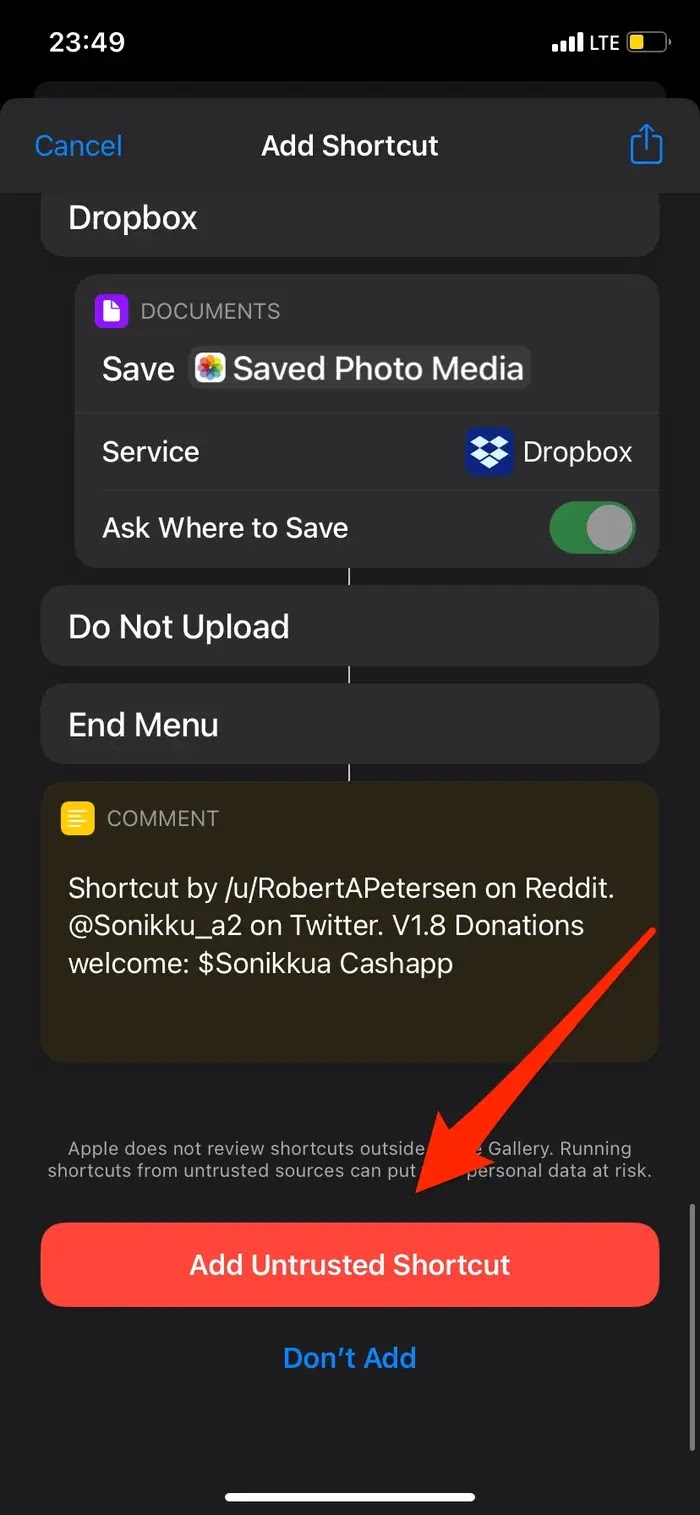
2. The Shortcuts app will open, listing all of the shortcut's features. At the bottom, tap "Add Untrusted Shortcut."


3. Choose which contacts will receive a message with your location. Then hit "Continue."

4. Next, select which contacts will receive a copy of the video.

5. Now select "Done."


6. Back on the My Shortcuts tab, tap "All Shortcuts," and then tap the three dots (...) on the I'm getting pulled over shortcut.

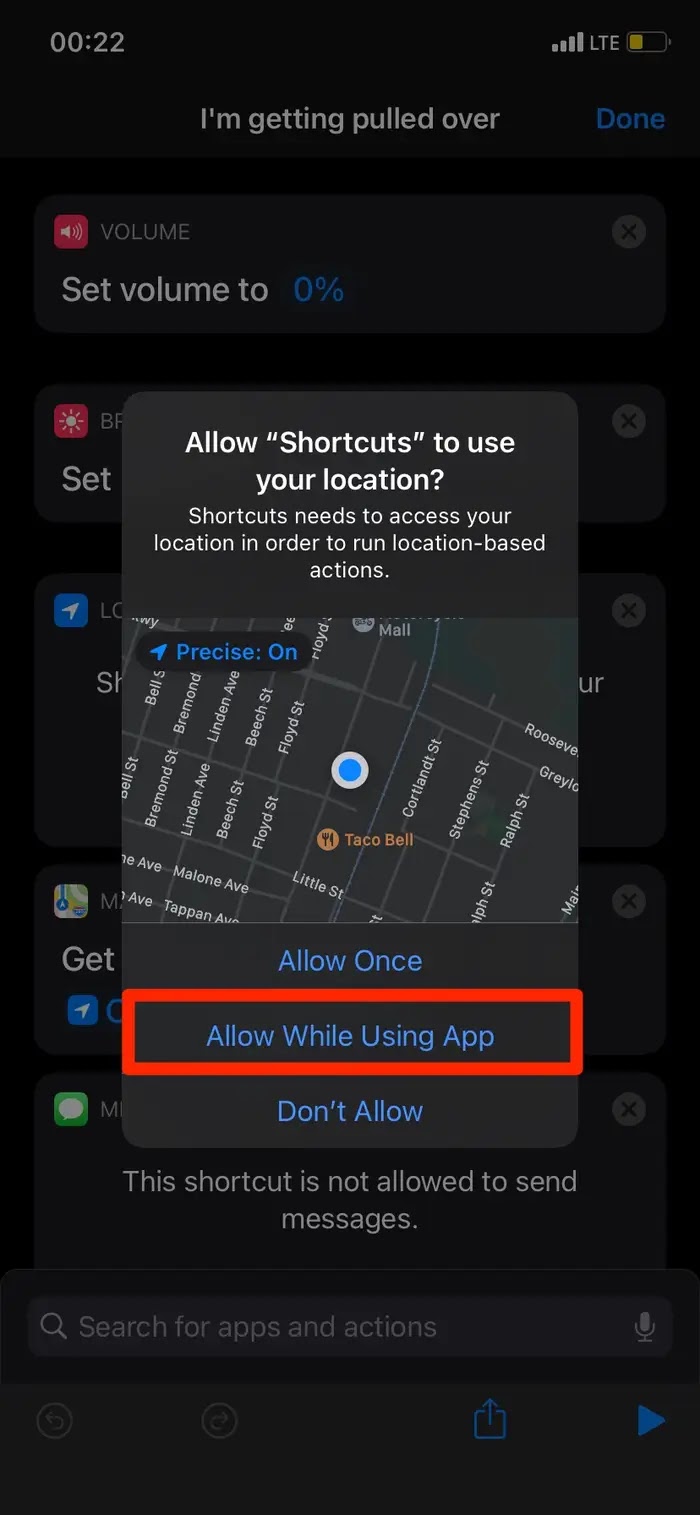
7. Scroll down to the "Location" section and select "Allow Access," then tap "Allow While Using App."


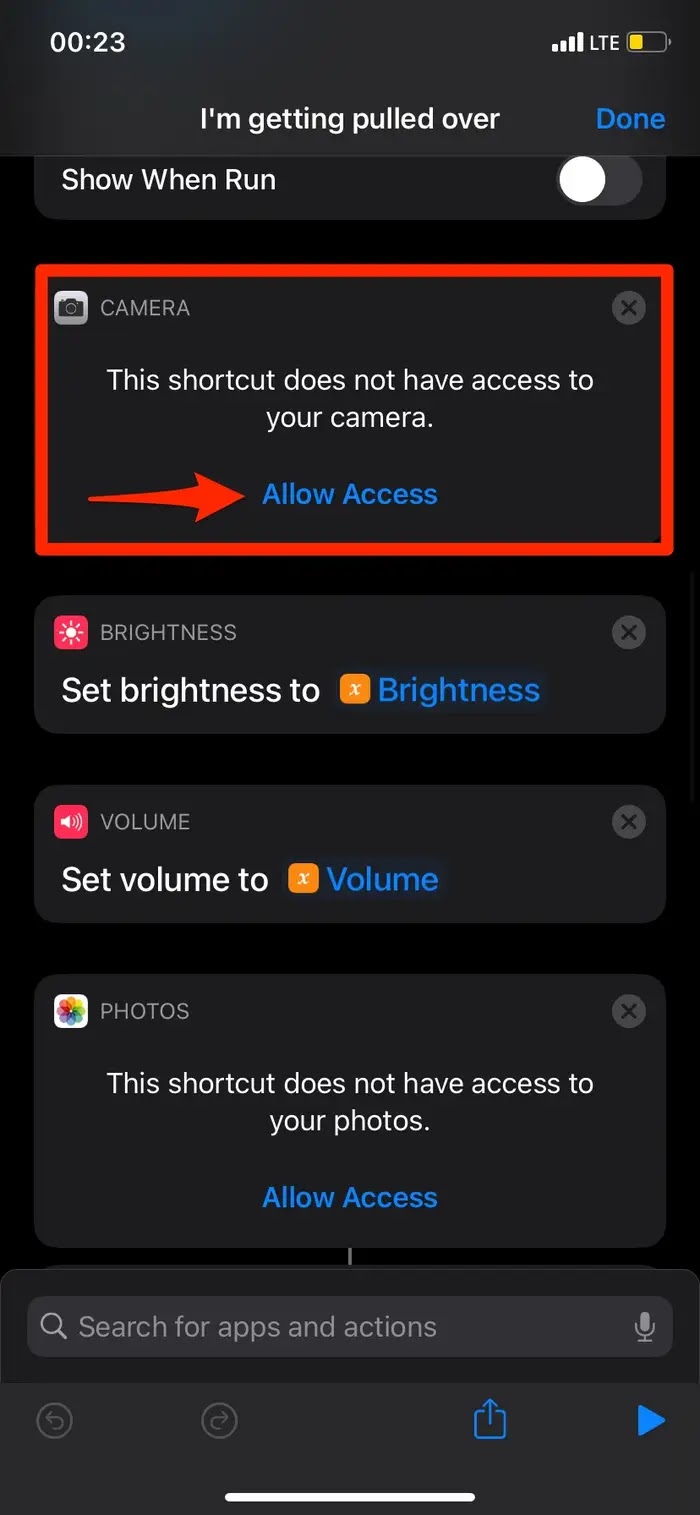
8. Scroll down to the Messages, Camera, and Photo sections and do the same thing — tap "Allow Access," and then "OK."


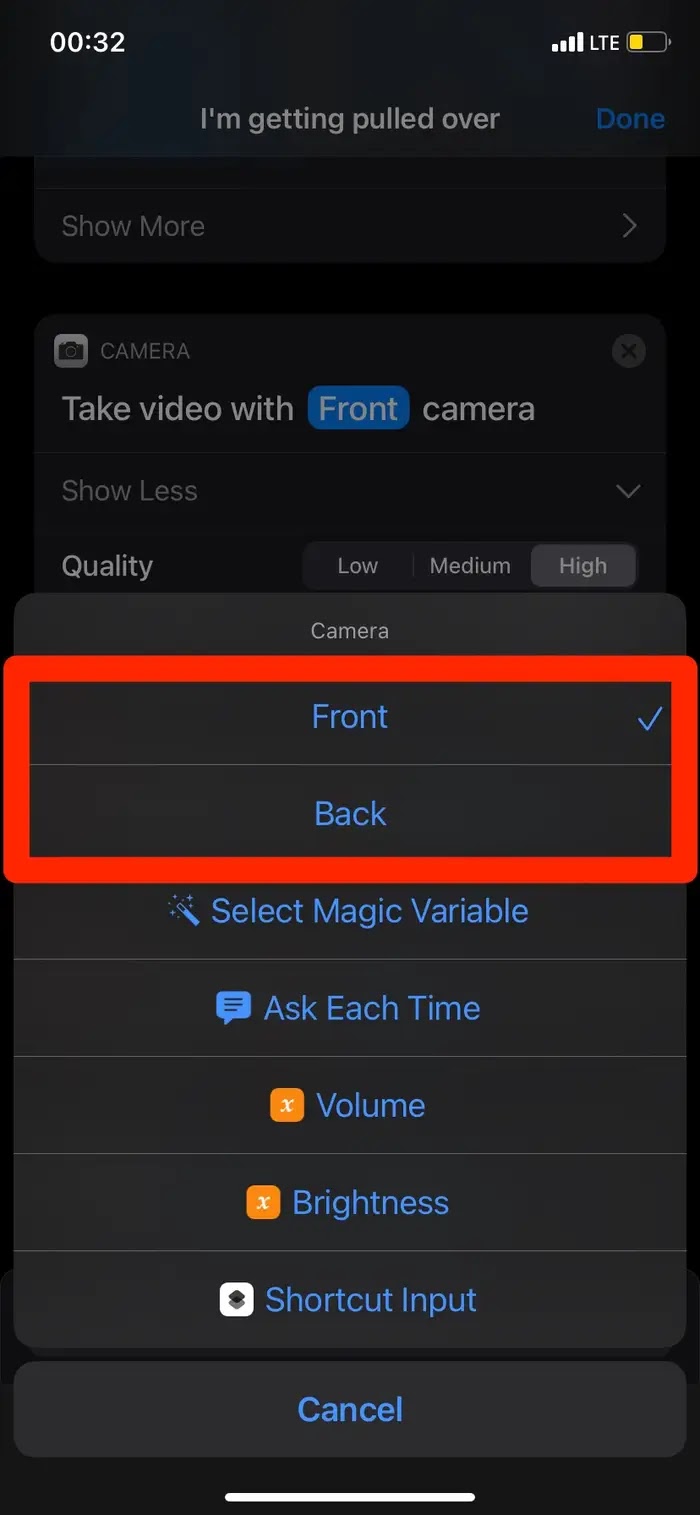
9. In the Camera section, select Front or Back depending on what camera you want to start the recording with.


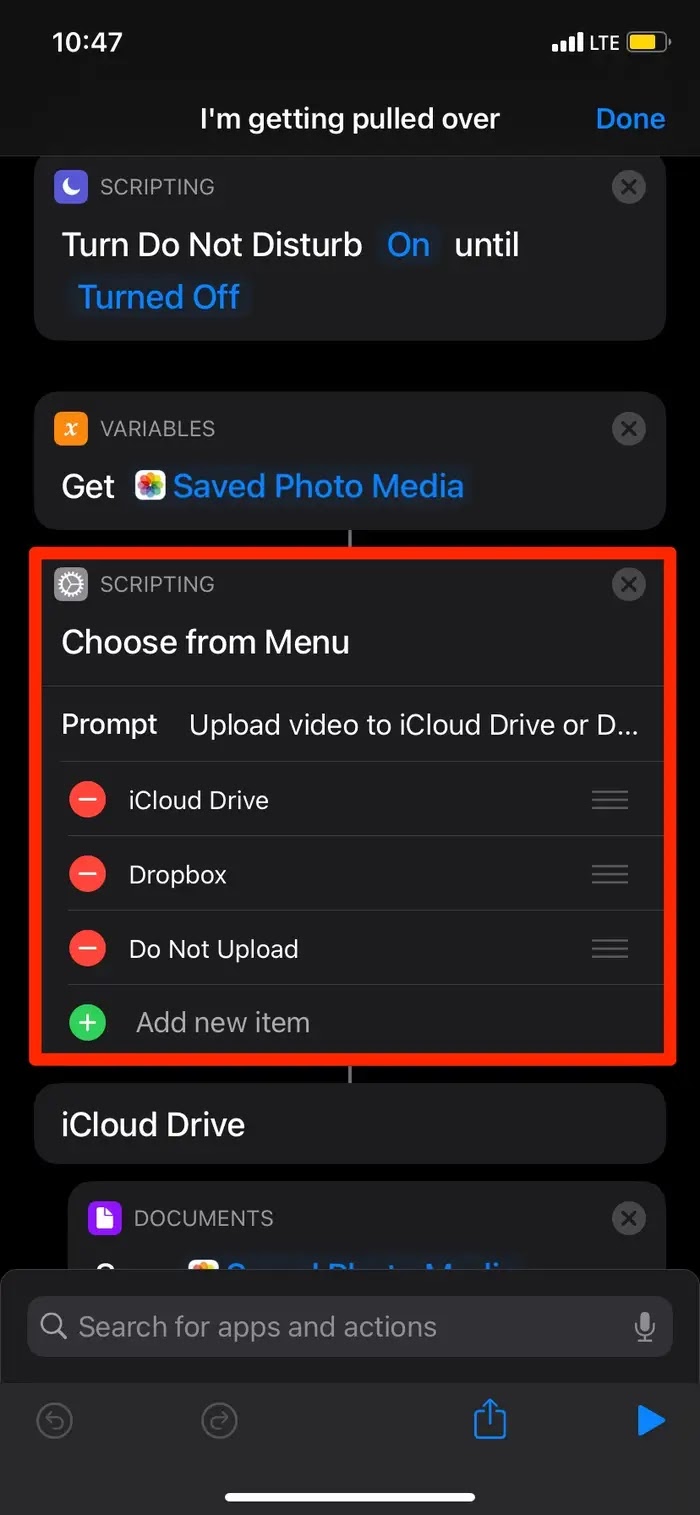
10. Scroll down to the Scripting "Choose from Menu" settings and choose where to store your video when the shortcut ends. You'll have the following options:
  • iCloud Drive
  • Dropbox
  • Do not upload
You can tap one of the red minus options to delete a location, or the green plus to add one.


11. When complete, choose "Done" to confirm your settings.

COVID-19 Update

World
New Cases:    657,966 (⬆︎ .46%)
New Deaths:       9,454 (⬆︎ .32%)

USA
New Cases:   51,650  (⬆︎ .16%)
New Deaths:       488 (⬆︎ .08%)

Vaccination Scorecard
Total Vaccinations:           132.3 million (⬆︎ .84%)
Total Eligible Population:    49.5%
Total Population:                 39.9%


We've enjoyed a too-brief respite from the ravages of our soon-to-be self-inflicted catastrophe.

8 months ago, this was all blue. And even though it's still pretty green (<50-75 Air Quality Index), we can see the beginnings of a return to some very bad habits. Note the browning west of DC and northeast of Atlanta.

(It's not a very good quality video - you'll have to go full screen and then it loses some resolution. Sorry 'bout that.)


Carbon emissions are roaring back from COVID-19


Global energy-related carbon emissions will surge this year as coal, oil and natural gas consumption return from the pandemic that caused an unprecedented emissions decline, the International Energy Agency estimated Tuesday.

Why it matters:
  • The projected rise of nearly 5% would be the largest since the "carbon intensive" recovery from the financial crisis over a decade ago, IEA said, putting emissions just below their 2019 peak.

Threat level:
  • Tragic pandemics are a terrible reason for emissions cuts and they're not a climate policy.
  • But IEA head Fatih Birol, in a statement, called the carbon bounce-back a troubling sign.
  • "This is a dire warning that the economic recovery from the COVID crisis is currently anything but sustainable for our climate," he said in a statement.
  • "Unless governments around the world move rapidly to start cutting emissions, we are likely to face an even worse situation in 2022," Birol said.

The big picture:
  • IEA sees overall global energy demand rising 4.6% this year, pushing it back above 2019 levels, but varies by region.
  • Most of the increase comes in emerging markets and developing countries, while energy use in "advanced economies" will be 3% below pre-COVID levels, they estimate.

Yes, but knowing the future is hard.

"The pace of global vaccine rollouts, the possible emergence of new variants of the Covid-19 virus, and the size and effectiveness of economic stimulus measures all represent major uncertainties," IEA notes
.

The chart above shows IEA's projections for changes in CO2 emissions from coal, oil and natural gas.

Driving the news:
  • They see global oil demand rising over 6% this year, but staying below 2019 levels.
  • But global coal demand is expected to be higher than 2019 and approach its 2014 worldwide peak, IEA projects.
  • IEA sees China, the world's largest coal consumer, accounting for 55% of the 2021 increase in global coal demand.
  • They see China's coal demand, which rose slightly last year, at a record high in 2021.